DentiCore Reviews: A Line-by-Line Look at the Label, the Oxygen Theory and the Fine Print
By the Pure Life Origins Editorial Team · Updated October 2026
Disclosure: this article contains affiliate links. If you buy through them, we may earn a commission at no extra cost to you. It does not change what we write.
DentiCore at a Glance
| Form | Tablet, 30 per bottle; one a day with 6-8 oz of water (chew 10-15 seconds or swallow) |
| Core ingredients | Calcium 20 mg, iodine 50 mcg, copper 1.7 mg, chromium 50 mcg + a 120 mg blend of chlorella, chlorophyllin, boron and shilajit |
| Made in | USA according to the badges on the official page (GMP, FDA-registered facility); distributor in Aurora, Colorado |
| Guarantee | 60 days, counted from the day the package is delivered |
| Shipping (US) | Free on the 1-, 3- and 6-bottle orders per the official page; 5-7 working days |
| Main caution | Iodine, copper and chromium at meaningful doses — ask a doctor if you have a thyroid condition, diabetes or take medication |
Most dental supplements ask you to trust a proprietary blend. DentiCore's bottle carries a real Supplement Facts panel with milligram and microgram amounts for four of its minerals. That makes it one of the easier products in this category to judge on paper, and it is the reason this review is built around the label rather than around the sales story.
The sales story is unusual too. Instead of talking about bacteria on the teeth, the official page says gum and tooth problems come from poor oxygenation — bad bacteria from the mouth and airways supposedly mixing in the respiratory tract and starving the gums of oxygen. Below we separate what is printed on the bottle from what is said in the pitch, look at every ingredient, do the dose math for the minerals that matter, and go through price, shipping and the 60-day refund rules.
→ See the DentiCore label and formula on the official website
What Is DentiCore?
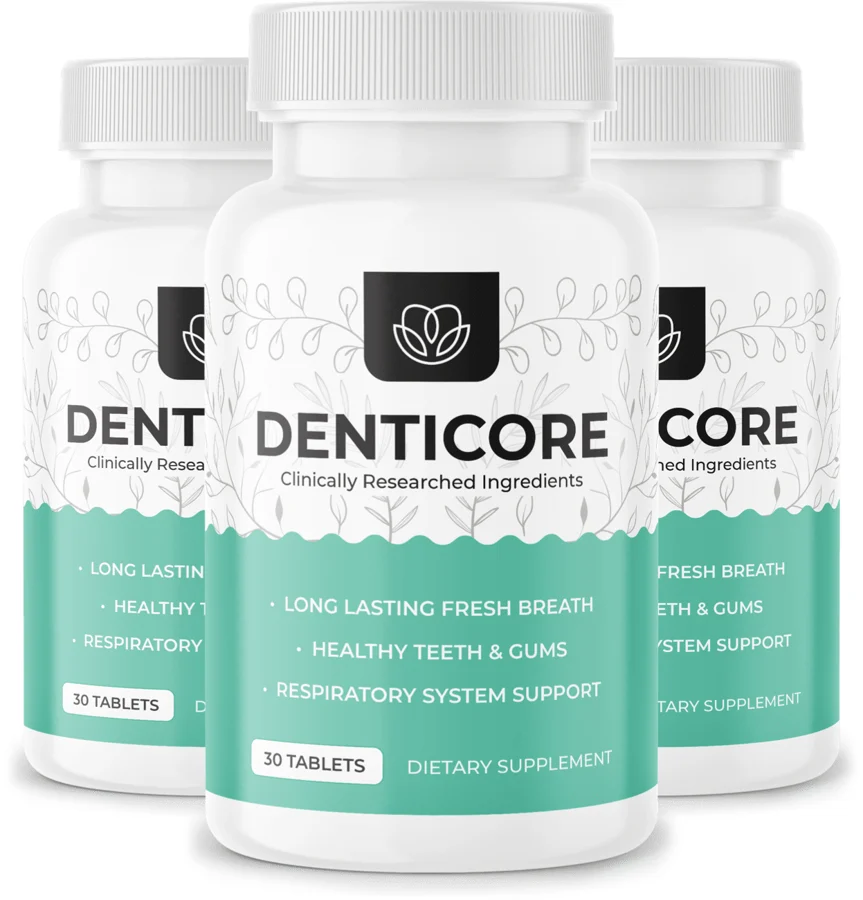
DentiCore is a dietary supplement sold online as a once-a-day tablet for teeth, gums and breath. The front label promises "long lasting fresh breath", "healthy teeth and gums" and — less typical for a dental product — "respiratory system support". Each bottle contains 30 tablets, so one bottle is a one-month supply.
The FAQ calls it a "soft chewable" and says you can either chew it for 10 to 15 seconds or swallow it whole with a big glass of water each morning. The label's suggested use is simpler: one tablet daily with 6 to 8 ounces of water. The product is described as natural, non-GMO and stimulant-free, and the order page displays badges for GMP, an FDA-registered facility and manufacturing in the USA. The label lists the distributor as DentiCore, 19655 E 35th Dr #100, Aurora, Colorado.
Keep in mind what those badges mean. An FDA-registered facility is a production site that is on file with the agency; it says nothing about whether the product works. The FDA does not review supplements for effectiveness before they go on sale, and the bottle itself carries the standard statement that its claims have not been evaluated by the FDA.
DentiCore at a Glance: The Supplement Facts Panel
This is what the label image on the official site shows for one tablet. The percentages are the label's own Daily Value figures.
| Per tablet | Amount (label) |
|---|---|
| Calcium (as dicalcium phosphate) | 20 mg — 2% DV |
| Iodine (as potassium iodide) | 50 mcg — 33% DV |
| Copper (from sodium copper chlorophyllin) | 1.7 mg — 189% DV |
| Chromium (as chromium chloride) | 50 mcg — 143% DV |
| Proprietary Dental Health Blend | 120 mg total: chlorella, sodium copper chlorophyllin, boron citrate complex, shilajit extract (5% fulvic acid) |
| Other ingredients | Xylitol, peppermint leaf extract, magnesium stearate, stearic acid, hydroxypropylcellulose, silicon dioxide, rebaudioside M (stevia-type sweetener), natural flavors |
Two things stand out. First, the 120 mg blend is small — about the weight of a pinch of salt shared among four botanicals and minerals — so none of them can be present in large amounts. Second, the doses that are disclosed are mostly minerals with real biological activity. Copper at nearly twice the Daily Value and chromium at well above it are not trivial numbers, and they deserve more attention than the marketing gives them.
How DentiCore Is Said to Work: The Oxygenation Claim vs. What Dentists Say
According to the FAQ, bacteria from your mouth travel down the respiratory tract, combine with bacteria from the nose and airways, and multiply. The result, the page says, is "poorer oxygenation", which leaves gums and teeth frail and prone to decay and inflammation. DentiCore's plants and minerals are then said to nourish blood vessels and tissues so they can support the teeth again, and even to deliver a "deep cleanse" of the mouth and respiratory system.
That explanation does not match how the US National Institute of Dental and Craniofacial Research describes gum disease. Gingivitis and periodontitis start with plaque, a sticky film of bacteria that forms on teeth along the gumline. If it is not removed, the gums become inflamed; over time, pockets form and the tissue and bone that hold teeth can be lost. Tooth decay works through a related path: bacteria in plaque ferment sugars into acids that dissolve enamel. Oxygen delivery from the lungs is not part of either explanation, and nothing in a swallowed mineral tablet removes plaque from a tooth surface.
One more detail worth knowing: the reference list on the official site includes studies on strontium, fulvic acid and peppermint essential oils. Strontium is not on the DentiCore label at all, and peppermint appears only as a flavoring among the other ingredients. Several entries are blogs or news items rather than research. None is a trial of DentiCore itself.
DentiCore Ingredients and What the Research Says
1. Calcium (20 mg)
Calcium is the main mineral in enamel and bone, and getting enough from food matters for lifelong health. But 20 mg is only 2% of the Daily Value — less than a single spoonful of yogurt provides. The NIH Office of Dietary Supplements notes that most people can meet their calcium needs through diet. At this dose, DentiCore's calcium is closer to a filler than a meaningful contribution, and it does not strengthen existing enamel; remineralization of early decay happens at the tooth surface, mainly with the help of fluoride and saliva.
2. Iodine (50 mcg)
Iodine is essential for making thyroid hormones. It has no established role in gum or tooth health. The 50 mcg dose is a third of the adult daily need (150 mcg) and far below the upper limit of 1,100 mcg, so on its own it is modest. The issue is stacking: many multivitamins, kelp products and iodized salt add more. For people with autoimmune thyroid disease, the NIH notes that even ordinary extra amounts can cause problems, which is why iodine shows up again in the safety section.
3. Copper (1.7 mg)
Copper is a trace mineral involved in connective tissue, iron metabolism and immune function. The label says it comes from sodium copper chlorophyllin, a green, water-soluble derivative of chlorophyll. At 1.7 mg, one tablet supplies almost double the Daily Value of 0.9 mg — still well below the adult upper limit of 10 mg per day set by the National Academies. Copper ions have antibacterial properties in laboratory work, and some studies look at copper in enamel, but there is no human evidence that a swallowed copper supplement improves gum health.
4. Chromium (50 mcg)
Chromium is better known in blood sugar supplements than in dental ones. The NIH fact sheet describes research on chromium and glucose control as mixed, with small or no benefits in most well-designed trials. It has no clear connection to the mouth. Its presence matters mainly for one group: people taking diabetes medication, because chromium might add to the glucose-lowering effect. At 143% of the Daily Value per tablet, it is a reason for those readers to check with a doctor.
5. Chlorella vulgaris (part of the 120 mg blend)
Chlorella is a single-celled freshwater alga sold as a "green superfood" and studied mainly for cholesterol and blood pressure, with small, inconsistent results. Oral health research on chlorella is essentially absent. The label specifies a cracked-cell form, which improves digestibility, but the amount in the blend is not disclosed and cannot be large.
6. Sodium Copper Chlorophyllin
Chlorophyllin has a long history as an internal "deodorant" and is used in some mouthwashes and breath products. Evidence that it improves breath when swallowed is thin, and most of what exists is decades old and uncontrolled. In DentiCore it doubles as the source of the copper described above.
7. Boron Citrate Complex
Boron is a trace element that affects how the body uses calcium, magnesium and vitamin D, and it has been studied for bone and joint health. Laboratory studies cited by the brand show boron compounds can slow some bacteria and influence tooth-germ cells in a dish, but those are not human results. Boron in small amounts from a blend this size is unlikely to be harmful or noticeably helpful.
8. Shilajit Extract (5% fulvic acid)
Shilajit is a tar-like resin from mountain rock used in Ayurvedic tradition. A small 2016 study in healthy men reported raised testosterone with purified shilajit, and it is marketed for energy and stamina. There are no trials for teeth or gums. Shilajit quality varies, and unpurified material can carry heavy metals, so third-party testing matters. The label specifies a standardized extract, but no certificate of analysis is published on the site.
Also on the label: xylitol and peppermint
Interestingly, one of the better-supported ingredients for teeth sits in the "other ingredients" line. Xylitol is a sugar alcohol that mouth bacteria cannot ferment into acid, and it is widely used in sugar-free gum. A Cochrane review found low-quality evidence that xylitol toothpaste may reduce cavities in children compared with fluoride toothpaste alone, and insufficient evidence for other xylitol products. The amount in DentiCore is not stated, and studies that showed benefits generally used several grams spread through the day. Peppermint gives flavor and a short-lived fresh feeling.
Prefer a label that lists actual doses? Compare DentiCore's current bundles on the official site.
Visit the Official DentiCore Website →Pros and Cons of DentiCore
Pros
- Supplement Facts panel shows doses for calcium, iodine, copper and chromium — more transparency than most dental supplements
- Simple routine: one tablet a day, 30 per bottle
- Sweetened with xylitol and a stevia-type sweetener rather than sugar
- A single bottle can be ordered, so you do not have to commit to a large bundle
- Free US shipping stated for every bundle; 60-day refund window counted from delivery
Cons
- The oxygenation and respiratory-cleansing explanation is not how gum disease is understood
- Most listed ingredients have no human research for teeth or gums
- The 120 mg blend is too small for its four components to be present in meaningful amounts
- Copper and chromium above 100% DV, plus iodine — a concern when combined with other supplements
- FAQ says it suits "all ages and medical conditions", while the label says not for under-18s or pregnant or nursing women
- Refunds require returning every bottle, with return postage paid by you
Who Might Consider DentiCore (and Who Should Not)
DentiCore is most likely to appeal to adults who:
- want a once-daily tablet with a published mineral panel rather than an undisclosed blend
- already brush with fluoride toothpaste, clean between their teeth and see a dentist for regular cleanings
- do not take other supplements containing iodine, copper or chromium
- are curious enough to try it for a couple of months while understanding that the evidence for the formula is weak
It is a poor fit, or needs medical advice first, for:
- anyone under 18, pregnant or breastfeeding — the label itself says it is not for these groups
- people with hypothyroidism, Hashimoto's, Graves' disease or a thyroid nodule, or who take thyroid medication
- people with diabetes on insulin or tablets, because of chromium
- people with Wilson's disease or liver disease affecting copper handling
- anyone with bleeding or receding gums, loose teeth, a swelling or persistent pain — those signs need a dental exam, and no supplement treats periodontitis
Safety and Side Effects: Doing the Mineral Math
No serious side effects have been publicly reported for DentiCore, and at one tablet a day the disclosed doses are below established upper limits. The practical risk comes from adding it on top of everything else you take. Here is how one tablet compares with the adult limits published by the NIH Office of Dietary Supplements:
- Iodine: 50 mcg vs. an upper limit of 1,100 mcg. Low on its own, but people with thyroid disease can react to smaller amounts, and kelp or "thyroid support" products can add hundreds of micrograms.
- Copper: 1.7 mg vs. an upper limit of 10 mg. A typical multivitamin adds around 1-2 mg more. Excess copper over long periods can affect the liver.
- Chromium: 50 mcg. No upper limit has been set, but the NIH warns that chromium may interact with insulin and diabetes medicines and with some other drugs.
- Calcium: 20 mg — negligible next to dietary intake.
The FAQ states that the ingredients "have been proven to be safe in clinical trials" and that the product suits all ages and medical conditions. That is broader than the label, which tells under-18s and pregnant or nursing women not to use it and asks anyone on medication to talk to a physician first. When the sales copy and the bottle disagree, follow the bottle.
Other things to watch: xylitol can cause loose stools in sensitive people (and is toxic to dogs, so keep the bottle away from pets); chlorophyllin can tint stools green; and shilajit and algae products depend on careful purification. If you notice stomach upset, a rash, palpitations or unusual fatigue, stop and ask a clinician.
How to Use DentiCore
Take one tablet each morning with 6 to 8 ounces of water. The FAQ says you can chew it for 10 to 15 seconds or swallow it whole; chewing at least gives the xylitol and peppermint a moment in the mouth. Do not take more than one a day — with trace minerals, more is not better. The label asks you to store the bottle in a cool, dry place below 86°F (30°C).
Keep your routine otherwise unchanged so you can tell whether anything differs: twice-daily brushing with fluoride toothpaste, flossing or interdental brushes, and your usual dental visits. The refund page suggests about three months of use before judging, which is longer than the 60-day window — more on that below.
DentiCore Price, Shipping and Guarantee
The official order page offers three bundles. The per-bottle prices are shown in images rather than page text, so confirm the totals at checkout:
| Bundle | What the official order page shows |
|---|---|
| 1 bottle (30-day supply) | $69 per bottle |
| 3 bottles (90-day supply) | $59 per bottle |
| 6 bottles (180-day supply) | $49 per bottle, plus 2 bonus e-books and a "surprise gift" |
| US shipping | Free on all three bundles, about 5-7 working days |
| Canada, UK, Ireland, Australia, NZ | $15.95, about 10-15 working days |
| Guarantee | 60 days from the delivery date |
The two bonuses with the six-bottle order are digital guides, one about breath and one about common mouth complaints. The FAQ confirms the order is a one-time purchase with no automatic rebilling.
The 60-Day Refund Policy: What the Terms Say
The refund page lays out four steps. You must be within 60 days of the delivery date (check the carrier tracking to know it). You email product support with "Refund Request" in the subject line. You then post back all bottles — empty, opened or sealed — with the packing slip and a note containing your name, email and order number, to the Aurora, Colorado returns address listed on the policy page. Return postage is not reimbursed, and the bank may take 5 to 10 days to show the credit once the return is processed.
The catch is timing. The same page advises using the product for at least three months before deciding, yet the guarantee lasts two. If you buy six bottles, you will have used only two by the deadline. Put a reminder in your calendar around day 45 so you have time to decide and ship the parcel.
→ Check today's DentiCore price and bundles on the official website
What We Saw on the Official DentiCore Order Page (October 13, 2026)
On October 13, 2026 we opened the official order page ourselves and followed the checkout up to the payment step, without placing an order, to record exactly what a buyer sees. The screenshots below are unedited crops from that visit.
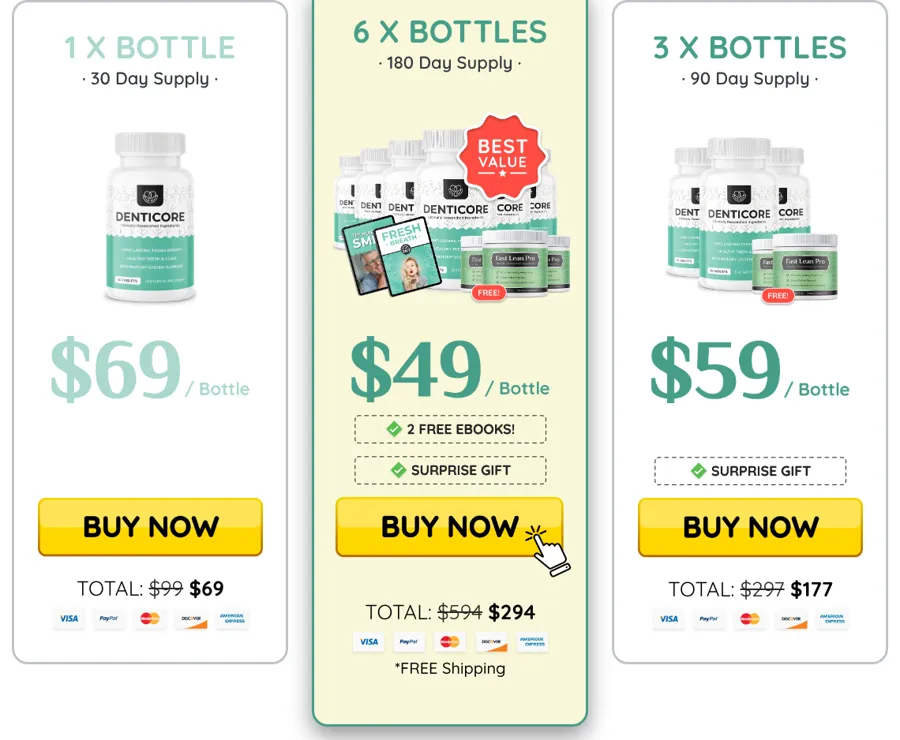
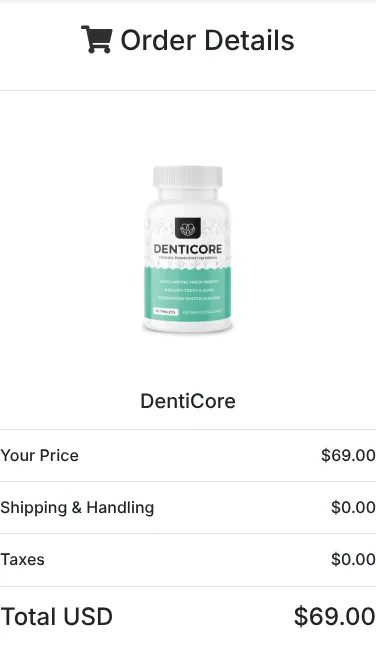
- At the secure checkout the bundles came to: DentiCore: $69.00 with free shipping; DentiCore - 3 Bottles: $177.00 with free shipping; DentiCore - 6 Bottles: $294.00 with free shipping. Tax showed as $0.00.
- Contact address listed on the official site: contact@denticore-product.com.
Where to Buy DentiCore
DentiCore is sold through its official website, which passes you to the official order page for payment. Copies on marketplaces or unfamiliar web shops may be expired or counterfeit, and they are not covered by the refund policy. Buying from the official page is the only way to be sure the 60-day terms apply.
DentiCore vs. Other Ways to Look After Your Gums
- Fluoride toothpaste and daily cleaning between teeth: the habits with the strongest evidence for preventing decay and gum disease. DentiCore does not replace them.
- Professional cleaning: hardened tartar can only be removed by a dental professional, and early gum disease often reverses with cleaning and better home care.
- Xylitol gum or mints: if xylitol is what interests you, chewing gum after meals delivers it more often and in larger amounts than one tablet a day.
Final Verdict
DentiCore earns credit for something many competitors avoid: it prints real doses for its four minerals. Reading that panel, though, also shows what the formula is — a general mineral and greens tablet with iodine, copper and chromium, plus a very small botanical blend — rather than an ingredient set designed around the bacteria that cause gum disease. The oxygenation and respiratory story behind it is not supported by dental science.
If you are a healthy adult, take no other iodine, copper or chromium supplements, and want to try it for two months alongside a good brushing and flossing routine, DentiCore is low-risk to try under its 60-day guarantee, and the single-bottle option keeps the cost down. If you have thyroid issues, diabetes or symptoms like bleeding gums, your money is better spent on a dental visit first. A tablet can be one small part of a routine; it is not a treatment.
Frequently Asked Questions (FAQs)
How much iodine is in DentiCore?
The label lists 50 mcg of iodine (as potassium iodide) per tablet, which is 33% of the Daily Value. The adult upper limit is 1,100 mcg, but people with thyroid conditions should ask a doctor first.
Is DentiCore chewed or swallowed?
Both are allowed. The FAQ says to chew it for 10 to 15 seconds or swallow it with a big glass of water each morning; the label says one tablet daily with 6 to 8 ounces of water.
Does DentiCore really improve gum oxygenation?
There is no published evidence for that. Gum disease starts with plaque buildup along the gumline and is managed with daily cleaning and professional care, not by changing oxygen supply.
Can teenagers or pregnant women take DentiCore?
The label says it is not for anyone under 18 or for pregnant or nursing women, even though the FAQ describes it as suitable for all ages. Follow the label.
Does DentiCore contain sugar?
No sugar is listed. It is sweetened with xylitol and rebaudioside M, a stevia-derived sweetener, plus natural flavors.
What is DentiCore's refund policy?
60 days from delivery. Email support with "Refund Request" in the subject, then return all bottles, used or not, with the packing slip. Return shipping is your cost.
Want to check today's DentiCore bundles and the current refund terms? The official site has the latest details.
Visit the Official DentiCore Website →References
- National Institute of Dental and Craniofacial Research (NIH). Gum (Periodontal) Disease.
- National Institute of Dental and Craniofacial Research (NIH). Tooth Decay.
- NIH Office of Dietary Supplements. Iodine — Fact Sheet for Health Professionals.
- NIH Office of Dietary Supplements. Copper — Fact Sheet for Health Professionals.
- NIH Office of Dietary Supplements. Chromium — Fact Sheet for Health Professionals.
- NIH Office of Dietary Supplements. Calcium — Fact Sheet for Health Professionals.
- NIH Office of Dietary Supplements. Boron — Fact Sheet for Health Professionals.
- Riley P, et al. Xylitol-containing products for preventing dental caries in children and adults. Cochrane Database Syst Rev. 2015;(3):CD010743.
- Kinane DF, Stathopoulou PG, Papapanou PN. Periodontal diseases. Nat Rev Dis Primers. 2017;3:17038.
- Pandit S, et al. Clinical evaluation of purified Shilajit on testosterone levels in healthy volunteers. Andrologia. 2016;48(5):570-575.
This review is for general information only and is not medical advice. Product details (ingredients, prices, guarantee) come from the official DentiCore pages as checked in October 2026; they can change, so confirm them at checkout. Talk to your doctor before starting any supplement, especially if you take prescription medication or have a health condition.